
Artificial intelligence is creating extraordinary demand for computing power. But every AI model and cloud service ultimately depends on physical infrastructure that requires electricity, water, cooling equipment, and access to the power grid.
Those requirements are now influencing public policy.
On July 14, 2026, New York announced a moratorium of up to one year on new hyperscale data centers while the state develops rules addressing their effects on utility costs, water supplies, infrastructure, and local communities. The U.S. Department of Energy has also identified data-center expansion as a major source of growing demand on the nation’s transmission system.
The question is no longer simply how quickly companies can build more computing capacity. It is how they can do so without overwhelming power grids, consuming unsustainable quantities of water, or shifting infrastructure costs to surrounding communities.
Data-Center Growth Has Reached a Physical Constraint
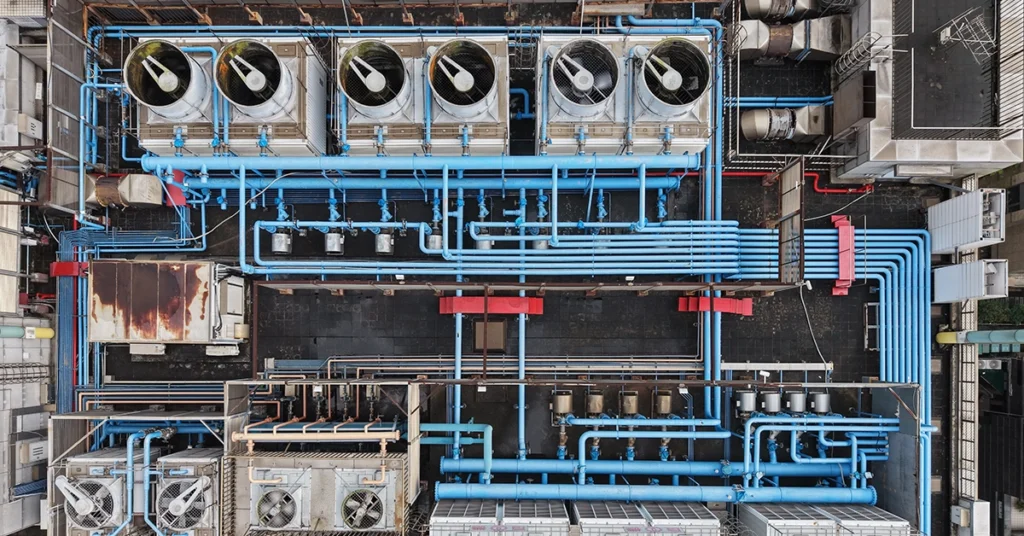
Advanced computing systems generate enormous amounts of heat. Removing it requires energy-intensive cooling equipment and, in many facilities, substantial water consumption. At the same time, hyperscale data centers can create new electricity demand faster than utilities can build generation and transmission infrastructure.
These pressures are forcing regulators, utilities, and technology companies to consider difficult questions:
- Who should pay for grid upgrades?
- Can facilities reduce their water consumption?
- Where will additional electricity come from?
- Can data centers reduce demand during peak periods?
- How can future projects operate without increasing utility costs?
For companies capable of solving these challenges, the opportunity is significant.
Technologies That Could Unlock Future Growth
Several technology areas could help data centers expand more sustainably:
Advanced cooling: Direct-to-chip liquid cooling and immersion systems may manage heat more efficiently than traditional air cooling.
Water conservation: Closed-loop systems, alternative refrigerants, and wastewater reuse could reduce dependence on local water supplies.
On-site power: Renewable generation, fuel cells, energy storage, advanced nuclear technology, and microgrids could reduce pressure on conventional grid connections.
Grid-responsive computing: Workload scheduling and demand-response systems could allow facilities to shift consumption away from peak periods.
Waste-heat recovery: Technologies could transform server heat into a resource for buildings or industrial processes.
In July 2026, the Department of Energy selected Amentum to enter negotiations for a proposed one-gigawatt AI data center paired with dedicated on-site energy generation. The project illustrates a possible direction for the industry: computing and energy infrastructure planned together.
Why Patent Intelligence Matters
The solutions to the data-center infrastructure problem may come from established operators, specialized startups, or companies in adjacent industries. Relevant technologies could originate in aerospace thermal management, electric-vehicle power systems, industrial heat recovery, or municipal water treatment.
Traditional keyword searches may overlook these relationships. Patent counts can also be misleading because a large portfolio does not necessarily contain strong or commercially valuable intellectual property.
Companies need to ask deeper questions:
- Which technologies are gaining momentum?
- Who owns the strongest patents?
- Where is the market becoming crowded?
- Which organizations have complementary portfolios?
- Which companies could become valuable partners or acquisition targets?
How Ontologics Can Help
Ontologics turns complex patent and technology data into actionable business intelligence. For companies participating in the data-center ecosystem, this analysis can help:
- Detect emerging cooling, energy, and water-management technologies
- Benchmark competitors by innovation and portfolio strength
- Evaluate the potential assertability of relevant patents
- Identify licensing, partnership, and acquisition opportunities
- Discover technologies that could transfer from adjacent industries
These insights can support data-center operators selecting new technology, utilities evaluating infrastructure solutions, investors conducting due diligence, and technology companies deciding where to direct research and development.
Turning Infrastructure Pressure Into Opportunity
New York’s moratorium demonstrates that AI infrastructure cannot be separated from its effects on electricity, water, and surrounding communities. Similar concerns are likely to arise wherever large data-center projects place new pressure on local resources.
The companies that lead the next phase of data-center development may not simply be those that build the largest facilities. They may be the organizations that identify and deploy the right innovations before their competitors recognize their value.
Ontologics helps organizations evaluate patent strength, benchmark competitors, detect emerging technologies, and uncover strategic opportunities. Contact Ontologics today to learn where data-center innovation is heading—and who is positioned to lead it.
Get a Free IP Analytics Report and See Your Patent Strength in Just 24 Hours!
Get a fast, evidence-based snapshot of your patent strength before you make your next investment or strategic move. Our proprietary AI analyzes your IP in minutes and delivers insights you won’t find anywhere else.