
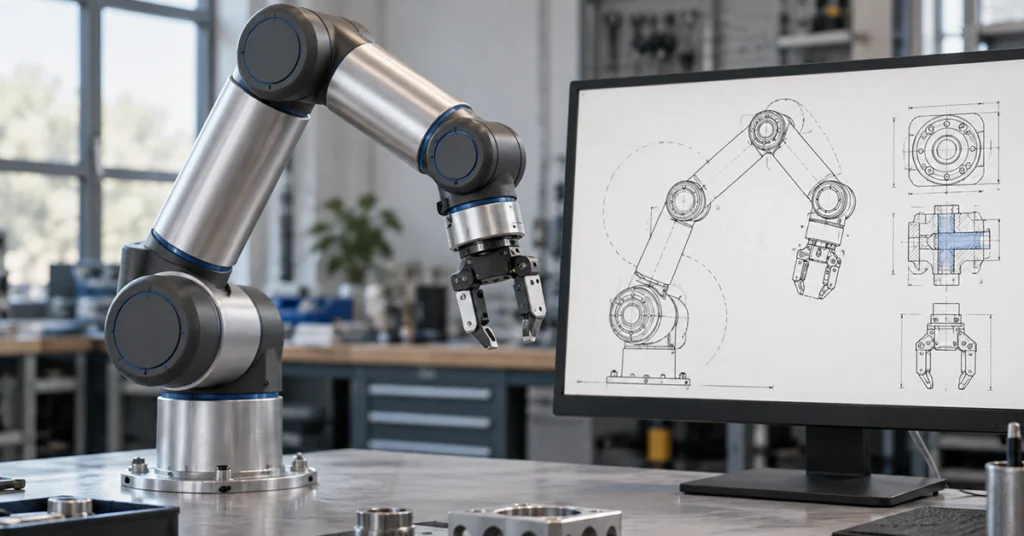
JAKA Robotics says it commissioned two independent Freedom to Operate reviews before entering the European market. According to the company, neither identified potential patent infringement relevant to its activities.
The company is nevertheless involved in a patent dispute with Teradyne Robotics.
On August 27, 2026, Teradyne announced that it had initiated a patent infringement case at the Unified Patent Court in Copenhagen against JAKA’s German subsidiary. The allegations concern hardware and software patents associated with Universal Robots and collaborative robots marketed by JAKA in the EU. Teradyne’s announcement.
JAKA rejected the allegations. In its September 3 response, it cited the two external FTO analyses and announced legal action over public statements it considered misleading and damaging. JAKA’s response.
The announcements establish neither infringement nor deficiencies in JAKA’s reviews. Their scope and methodology cannot be evaluated from those statements.
But the dispute gives business leaders a concrete reason to examine what they expect an FTO review to deliver—and how they use its conclusions.
What Confidence Should an FTO Review Provide?
A Freedom to Operate analysis evaluates whether a planned product, process, or activity may infringe another party’s patent rights. It combines patent research with legal assessment to help a business understand its exposure and make informed decisions.
WIPO explains that FTO analysis can reduce risk, while an absolute guarantee of freedom to operate is unattainable. WIPO’s explanation of FTO.
A favorable assessment therefore gives a business a reasoned basis for proceeding within the circumstances reviewed. Another patent owner may still challenge the conclusions.
For executives, the most useful result is an assessment they can act on: a clear explanation of what was examined, which rights matter, where uncertainty remains, and which decisions the findings support.

Five Things Your Business Should Expect
1. A clearly defined product and market scope
The review should identify the product configuration, technical functions, and activities examined. For a robotics company, that could include specific hardware, control software, accessories, and operating methods.
Geography also matters. The assessment should reflect the countries relevant to manufacturing, sales, imports, and use. WIPO’s guidance identifies country or regional scope, patent claims, and legal status as essential considerations in an FTO search. WIPO PATENTSCOPE glossary.
2. Relevant patents connected to product features
A useful assessment should explain why particular patent rights deserve attention and how their claims relate to the technology under review.
A list of similar-looking inventions leaves the business with substantial unanswered questions. Leaders need to understand which features require closer examination and what technical information counsel needs to assess them.
3. An explanation of uncertainty
The report should make material assumptions and limitations understandable.
For example, does a conclusion depend on how a control function operates? Is additional information needed about a purchased component? Could a different interpretation of a patent claim affect the assessment?
Identifying those uncertainties gives engineering and legal teams specific issues to resolve.
4. Practical options for moving forward
The findings should support decisions. Depending on the circumstances, the business might proceed with its planned design, investigate further, evaluate an alternative implementation, or explore licensing.
The assessment becomes more valuable when those choices are discussed while the team still has flexibility over product design, investment, and launch timing.
5. Clear reasons to revisit the analysis
The business should understand which changes could affect the conclusions. These might include a substantial software update, a new mechanical design, expansion into another country, or a relevant patent development.
Agreeing on review triggers with counsel helps the team determine when additional work is warranted. WIPO’s business guidance similarly places IP searches, competitor monitoring, and periodic review throughout commercialization. WIPO’s IP strategy checklist.
Keeping the Review Connected to the Product
Consider a hypothetical robotics manufacturer that obtains an FTO assessment for a particular robotic arm, gripper, and control system.
Several months later, its engineers introduce a different gripping mechanism and update the motion-control software. The commercial team also prepares to enter another country.
The earlier analysis may remain valuable. The company now needs to determine whether its conclusions extend to the updated configuration and market.
This example is illustrative. The public statements do not establish that product changes or outdated analysis explain the Teradyne–JAKA dispute.
Patent information also changes. Applications progress, patents are granted, and rights can lapse. The European Patent Office identifies legal-event data as an input to FTO research because it helps establish the status of applications and patent rights. EPO guidance on legal-event data.
A practical follow-up process assigns responsibility for tracking relevant developments and bringing meaningful changes to counsel’s attention. Engineering, legal, and commercial teams each hold information that can affect the assessment.
Where AI-Assisted Patent Intelligence Fits
AI-assisted patent intelligence can help teams discover potentially relevant documents, organize patent families, and investigate technical relationships across different terminology.
That can be particularly useful in robotics, where one product combines several technologies. Our earlier article on robotics and FTO explores how relevant patent research can extend across sensing, software, mechanical systems, and application-specific functions.
The results should be traceable to the underlying documents so reviewers can verify their relevance. Patent counsel then evaluates claim scope and the legal implications for the product.
For a business approaching its next launch, a useful starting point is to compare its current product specification and market plan with the scope of its latest FTO assessment. Identify what has changed, what remains uncertain, and who will address each open issue.
Get a Clearer View of Your Patent Portfolio
Ontologics helps companies explore patent portfolios, competitive positioning, and technology relationships to support more informed business decisions.
Request a Free Executive IP Analytics Report to better understand a company’s patent portfolio, its strengths, and its position relative to competitors.